This is default featured slide 1 title

Go to Blogger edit html and find these sentences.Now replace these sentences with your own descriptions.This theme is Bloggerized by Lasantha Bandara - Premiumbloggertemplates.com.

This is default featured slide 2 title

Go to Blogger edit html and find these sentences.Now replace these sentences with your own descriptions.This theme is Bloggerized by Lasantha Bandara - Premiumbloggertemplates.com.

This is default featured slide 3 title

Go to Blogger edit html and find these sentences.Now replace these sentences with your own descriptions.This theme is Bloggerized by Lasantha Bandara - Premiumbloggertemplates.com.

This is default featured slide 4 title

Go to Blogger edit html and find these sentences.Now replace these sentences with your own descriptions.This theme is Bloggerized by Lasantha Bandara - Premiumbloggertemplates.com.

This is default featured slide 5 title

Go to Blogger edit html and find these sentences.Now replace these sentences with your own descriptions.This theme is Bloggerized by Lasantha Bandara - Premiumbloggertemplates.com.

Rabu, 06 Juni 2012

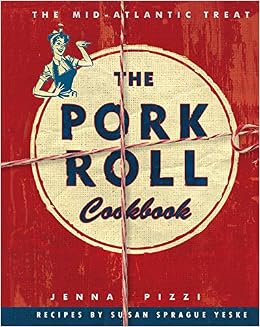
Download The Pork Roll Cookbook

Download The Pork Roll Cookbook

The Pork Roll Cookbook. Learning to have reading routine resembles learning how to try for eating something that you actually don't really want. It will certainly require even more times to help. Moreover, it will certainly also little bit make to serve the food to your mouth and also swallow it. Well, as checking out a book The Pork Roll Cookbook, occasionally, if you should read something for your new works, you will feel so woozy of it. Even it is a publication like The Pork Roll Cookbook; it will make you feel so bad.

The Pork Roll Cookbook

The Pork Roll Cookbook


The Pork Roll Cookbook


Download The Pork Roll Cookbook

Currently, please welcome thee most current publication to offer that can be your option to review. Currently, we have that book qualify The Pork Roll Cookbook This is what makes many individuals really feel desired to take the checklists only for getting this publication. When many individuals are aiming to get this book by taking some lists, we are below to relieve your means. Are you among those people who are much appreciated of this publication? Let's open your opportunity below.

As one of the book compilations to suggest, this The Pork Roll Cookbook has some strong reasons for you to check out. This publication is extremely suitable with what you need currently. Besides, you will certainly also love this book The Pork Roll Cookbook to check out due to the fact that this is among your referred publications to read. When getting something brand-new based upon experience, amusement, and also other lesson, you can use this publication The Pork Roll Cookbook as the bridge. Starting to have reading behavior can be undergone from different methods and also from alternative types of publications

Starting from visiting this website, you have aimed to begin nurturing reading a book The Pork Roll Cookbook This is specialized site that market hundreds compilations of publications The Pork Roll Cookbook from great deals sources. So, you won't be tired anymore to select the book. Besides, if you also have no time to browse guide The Pork Roll Cookbook, just rest when you're in workplace and also open up the internet browser. You could find this The Pork Roll Cookbook inn this internet site by attaching to the internet.

Your impression of this publication The Pork Roll Cookbook will lead you to acquire just what you precisely need. As one of the inspiring publications, this book will supply the visibility of this leaded The Pork Roll Cookbook to collect. Even it is juts soft file; it can be your cumulative documents in gadget as well as other device. The crucial is that use this soft data publication The Pork Roll Cookbook to review as well as take the advantages. It is just what we mean as book The Pork Roll Cookbook will certainly improve your ideas and mind. After that, reviewing book will certainly likewise enhance your life high quality better by taking great action in well balanced.

The Pork Roll Cookbook

About the Author

Susan Sprague Yeske is familiar to food lovers in central New Jersey from her years as Food Editor for The Times of Trenton. She continues to write a weekly Food Notes column and is an award-winning restaurant critic for the newspaper.

Read more

Product details

Hardcover: 160 pages

Publisher: Cider Mill Press (February 24, 2015)

Language: English

ISBN-10: 160433536X

ISBN-13: 978-1604335361

Product Dimensions:

7 x 0.5 x 9 inches

Shipping Weight: 14.4 ounces (View shipping rates and policies)

Average Customer Review:

4.7 out of 5 stars

16 customer reviews

Amazon Best Sellers Rank:

#279,052 in Books (See Top 100 in Books)

In Northern New Jersey, it is called a Taylor Ham. In Central and Southern New Jersey, it is referred to as the pork roll. The Pork Roll is actually produced and distributed by the Taylor Ham company and the Case Pork Roll.This book is quite informative on about the Pork Roll's colorful history and influence on the New Jersey and Mid-Atlantic region. The book is both entertaining and informative about New Jersey living. The pork roll is a deli staple in New Jersey. The book offers an introduction on four chapters entitled; "A History of the Pork Roll;" "A Porcine Party;" "Pork Roll Today;" and "A New Jersey Thing."After reading about the pork roll's history, you will no doubt want to try easy simple recipes. The book has recipes for "Starters & Snacks" including "Deviled Eggs with Pork Roll;" "Jersey Style Creamy Dip;" "Pork Roll Stromboli;" and others in this section.The "Breakfast and Brunch" section includes recipes for "Pork Roll Sandwich;" "Crispy Pork Roll Hash;" "Stuffed French Toast;" "Pork Roll Strata;" and others too.The third section is entitled "Soups and Sandwich" where it includes recipes such as "Pork Roll Monte Cristo Sandwich;" "Egg Salad with Pork Roll;" Potato Pork Roll Soup;" and more.The fourth and final section is entitled "Main Meals" with recipes for "Trenton Style Spaghetti A La Carbonara;" "Porkrollnita;" "Pork Roll Alfredo;" "Pork Roll Jambalaya;" and more recipes.For a Pork Roll fan or a New Jersey enthusiast, you will enjoy reading this book and trying out the recipes. The layout is easy and colorful.

The book is not only a porkroll cookbook but it has an added bonus that it tells the history of porkroll and has beautiful pictures to go with it.

Being from NJ where pork roll originated, this book is really cool. Not only does it provide great recipes, it gives you a history of pork roll and NJ.

Love this cookbook...great recipes as well as a lot of trivia about pork roll and how it was started and still made in Trenton NJ....my hometown! Lots of pictures too!

This book is everything I expected and more. I read through it in one sitting, sometimes salivating while reading the numerous recipes using pork roll. I couldn't wait to go in search for some Taylor Pork Roll here in NC, and luckily found it at one of the more upscale supermarkets in my area. I grew up in a suburb of Philadelphia, where it was readily available, and my family and I all loved it. This is a great little cookbook that is welcomed to my rather large collection of cookbooks.

Gave as a gift for Christmas and the recipient was thrilled! Has been enjoying the tidbits of information on a local/regional product.

Turns out this is more of a novelty than a cookbook, but I'm glad to have it on my New Jersey bookshelf.

This book is not what I expected. Not sure home much use I will get from it.

The Pork Roll Cookbook PDF
The Pork Roll Cookbook EPub
The Pork Roll Cookbook Doc
The Pork Roll Cookbook iBooks
The Pork Roll Cookbook rtf
The Pork Roll Cookbook Mobipocket
The Pork Roll Cookbook Kindle

The Pork Roll Cookbook PDF

The Pork Roll Cookbook PDF

The Pork Roll Cookbook PDF

Selasa, 05 Juni 2012

Get Free Ebook No One Dreams of Being a Fundraiser

Get Free Ebook No One Dreams of Being a Fundraiser

When his is the moment for you to constantly make deal with the feature of guide, you can make bargain that the book is actually suggested for you to get the best idea. This is not just finest ideas to get the life yet additionally to go through the life. The way of life is sometimes satisfied the instance of excellences, however it will certainly be such thing to do. And currently, the book is one more time advised here to check out.

No One Dreams of Being a Fundraiser

No One Dreams of Being a Fundraiser


No One Dreams of Being a Fundraiser


Get Free Ebook No One Dreams of Being a Fundraiser

Outstanding item is now offered right here. The book entitled No One Dreams Of Being A Fundraiser is offered in this site as one of the latest updated to offer. Yeah, this is just one of recommended books that now lots of people look for guide. You might become one of those who are very lucky today. You locate this website that will supply you the most effective recommendation of this book.

When a needed of checking out grows greater, it's the time to select the new book, when the very best publication worldwide for any kind of age is supplied, you could take it as soon as possible. It will not need to wait on long period of time once more. Getting this publication earlier after reading this passage is really wise. You could see just how the No One Dreams Of Being A Fundraiser really has the hundreds followers.

As well as how this book will aid you? Do you think that you have problem with comparable subject? This is no stress over this. Even you have had the sources to fix your problems; this publication will complete just what you need. No One Dreams Of Being A Fundraiser is just one of the books that that has actually been composed by the relied on author. With the experience, understanding, and also facts that are supplied by this book, it is really professional.

By clicking the web link that we offer, you could take the book No One Dreams Of Being A Fundraiser completely. Connect to internet, download, as well as save to your tool. Just what else to ask? Reading can be so simple when you have the soft file of this No One Dreams Of Being A Fundraiser in your gadget. You could additionally copy the documents No One Dreams Of Being A Fundraiser to your office computer or in your home or perhaps in your laptop. Just discuss this excellent news to others. Suggest them to visit this web page and also obtain their looked for books No One Dreams Of Being A Fundraiser.

No One Dreams of Being a Fundraiser

Review

No One Dreams of Being a Fundraiser is a candid, humorous, and at times irreverent examination of the largely unexamined world of major gift fundraising. Seasoned fundraisers will find Mitch’s observations both familiar and relatable, while those new to the field will benefit from his stories and cautionary tales. (Joshua R. Newton, President and CEO, UCONN Foundation)Linker’s approach to fundraising is beautifully articulated in this informative, fun and fresh memoir. I’ve been solicited by many fundraisers over the years. His honest, authentic, inquisitive style of raising money is appealing to donors and it works! (Valerie Friedman, Financial Planner)Nearly all of us had a different dream but we awoke to this profession. Linker shows how this new reality can be better than the dream. If you are new to fundraising, read No One Dreams of Being a Fundraiser first. (Joshua M. Birkholz, Principal, Bentz Whaley Flessner and author of Fundraising Analytics)It is an astonishing thing to read a book about fundraising—fully not expecting it to be personal, honest and touching—only to become emotionally invested after the first page. Linker brings us on a journey from his promising musical career into his immersion into fundraising and all the stumbling blocks that go with it. His charm and humor make this story fun and deeply relatable. (Chris Trapper, Singer/Songwriter)

Read more

About the Author

Mitchell Linker has been working in development for fifteen years, primarily at private college preparatory institutions. Since 2008, Linker has also served as the volunteer Development Chair of Our Companions Animal Rescue, an animal welfare organization founded by his wife Susan. Together, they have grown Our Companions Animal Rescue into a multi-million dollar domestic animal sanctuary, the only one of its kind in New England.

Read more

Product details

Paperback: 94 pages

Publisher: Hamilton Books (July 31, 2017)

Language: English

ISBN-10: 0761869646

ISBN-13: 978-0761869641

Product Dimensions:

6 x 0.2 x 9 inches

Shipping Weight: 6.9 ounces (View shipping rates and policies)

Average Customer Review:

Be the first to review this item

Amazon Best Sellers Rank:

#942,197 in Books (See Top 100 in Books)

No One Dreams of Being a Fundraiser PDF
No One Dreams of Being a Fundraiser EPub
No One Dreams of Being a Fundraiser Doc
No One Dreams of Being a Fundraiser iBooks
No One Dreams of Being a Fundraiser rtf
No One Dreams of Being a Fundraiser Mobipocket
No One Dreams of Being a Fundraiser Kindle

No One Dreams of Being a Fundraiser PDF

No One Dreams of Being a Fundraiser PDF

No One Dreams of Being a Fundraiser PDF

Minggu, 03 Juni 2012

Download Ebook Backyard Foraging: 65 Familiar Plants You Didn’t Know You Could Eat, by Ellen Zachos

Download Ebook Backyard Foraging: 65 Familiar Plants You Didn’t Know You Could Eat, by Ellen Zachos

Discover the technique of doing something from several sources. One of them is this publication entitle Backyard Foraging: 65 Familiar Plants You Didn’t Know You Could Eat, By Ellen Zachos It is a very well understood book Backyard Foraging: 65 Familiar Plants You Didn’t Know You Could Eat, By Ellen Zachos that can be recommendation to check out now. This advised publication is one of the all fantastic Backyard Foraging: 65 Familiar Plants You Didn’t Know You Could Eat, By Ellen Zachos compilations that are in this website. You will likewise locate other title and also motifs from various writers to look here.

Backyard Foraging: 65 Familiar Plants You Didn’t Know You Could Eat, by Ellen Zachos

Backyard Foraging: 65 Familiar Plants You Didn’t Know You Could Eat, by Ellen Zachos


Backyard Foraging: 65 Familiar Plants You Didn’t Know You Could Eat, by Ellen Zachos


Download Ebook Backyard Foraging: 65 Familiar Plants You Didn’t Know You Could Eat, by Ellen Zachos

If you are still back to back to find the ideal book to read, we have actually provided a fantastic publication as prospects. Backyard Foraging: 65 Familiar Plants You Didn’t Know You Could Eat, By Ellen Zachos as one of the referred publications in this article can be appreciated now. It is not only regarding the title that is very intriguing and also draws in people ahead reviewing it. And also why we offer this publication to you is that it will certainly be your good friend along your leisure time.

But, do you assume that checking out publication will make you feel burnt out? Occasionally, when you always review and complete guide quickly as well as fast, you will certainly feel so bored to invest often times to review. Here, you could anticipate having only little time in a day or juts for spending your downtime. And also the book that we come currently is Backyard Foraging: 65 Familiar Plants You Didn’t Know You Could Eat, By Ellen Zachos, so it will certainly make some fun for you.

Checking out absolutely this publication could develop the precise demand as well as serious methods to go through and also conquer this trouble. Book as a home window of the globe could have the precise situation of how this book exists. Backyard Foraging: 65 Familiar Plants You Didn’t Know You Could Eat, By Ellen Zachos as we advise being candidate to check out has some advances. Besides it is watched from exact same topic as you need, it has also interesting title to check out. You can additionally see how the layout of the cover is stylised. They are really well done without frustration.

This Backyard Foraging: 65 Familiar Plants You Didn’t Know You Could Eat, By Ellen Zachos has the tendency to be exactly what you are required now. It will acquire to overcome the visibility of intriguing topic to go over. Even many individuals feel that this is not appropriate for them to review, as a good viewers, you can think about various other reasons. This publication is great to review. It will certainly not need to compel you making depictive topic of guides. However, ideas and passion that are provided kind this book can be attained to everyone.

Backyard Foraging: 65 Familiar Plants You Didn’t Know You Could Eat, by Ellen Zachos

From Booklist

Sixty-five familiar plants you didn’t know you could eat are the stars of this impressively comprehensive guide by horticulturist Zachos, who stresses the “ease and elegance” of foraging familiar plants—greens, fruits, nuts, seeds, tubers, and fungi—in yards and nearby environs. Safety first is the mantra when harvesting in the hood, Zachos instructs. She also provides a section on such necessary “tools of the trade” as bypass pruners and canning jars. She fully describes the categorically arranged 65 plants, from bamboo to redbud and ginkgo, providing how-to discussions on harvesting and preparation. Eye-catching sidebars on legality, quick plant identification, food-preparation tips, and more accompany the main text, which is abundantly illustrated with full-color photos throughout. Back matter includes instructions on freezing and dehydration and recipes for syrups, jams, alcoholic beverages (“Dandelion wine is the color of sunshine”), baked goods, and savory dishes. --Whitney Scott

Read more

Review

“[An] impressively comprehensive guide by horticulturist Zachos, who stresses the “ease and elegance” of foraging familiar plants―greens, fruits, nuts, seeds, tubers, and fungi―in yards and nearby environs. … Eye-catching sidebars on legality, quick plant identification, food-preparation tips, and more accompany the main text, which is abundantly illustrated with full-color photos throughout.” (John Kallas, director of Wild Food Adventures)“Forget farm to table. Here’s weed to bowl. ... Extremely appealing.”

Read more

See all Editorial Reviews

Product details

Paperback: 240 pages

Publisher: Storey Publishing, LLC; 1st edition (March 12, 2013)

Language: English

ISBN-10: 1612120091

ISBN-13: 978-1612120096

Product Dimensions:

7 x 0.5 x 9 inches

Shipping Weight: 15.2 ounces (View shipping rates and policies)

Average Customer Review:

4.7 out of 5 stars

134 customer reviews

Amazon Best Sellers Rank:

#66,952 in Books (See Top 100 in Books)

The physical paperback is 9" high x 7" wide and 1/2" thick with 223 pages not counting the "Resources" and index.The first 2 chapters covers basic gear, habitat, and manners when on other people's property.The chapters that follow are organized by greens; fruits and flowers; nuts and seeds; roots, tubers, and rhizomes; plants with many edible parts; and 5 easy to identify mushrooms. Within these chapters, the plant sections are ordered alphabetically by common name.The plant sections of the book begin with icons showing the season when the plant can be harvested. After the common name and the scientific name (Genus and species) it gives ...o What it is: native or invasive and very high level info.o Where to find it: gardens, yard, woods, sun or shade (no map).o Edible parts: leaves, roots, flowers, fruit.o The Details: mostly generic info that could not be used to positively identify the plant. It only occasionally gives details like number of flower petals, whether or not the leaves have teeth or lobes. Since most of these plants are garden or yard varieties, the author assumes the reader is already familiar with all of these details. Identification is mainly by a normally generous large main photo, often with multiple other photos showing the fruits or roots, or other plant parts.o How to Harvest: what parts to harvest and when to harvest.o How to Eat It: raw or cooked, how to cook, and other ways to prepare it.o When a plant has a "sound-alike" name or a "look-alike" cousin, then it may have a section describing similar plants to avoid.Most of the specific plant sections are 2 pages long, but a few are 4 pages.The last chapter is about "Preserving Advice and Basic Recipes".The cons of the book are ...- When the plant happens to be a large tree, the main photo is less effective since the reader can't see enough detail to distinguish the shape and other features of the leaves and bark. Usually the other photos help to fill in this gap, but this was not the case for Cornelian Cherry and Black Walnut. The Mayapple photo showed a large patch from a distance so its basic leaf shape could not be distinguished from the mass of greenery.- I disagreed with the author's claim that "No milkweed parts should be eaten raw." I've eaten the flower buds and small pods and found them delicious and slightly sweet, and not bitter without cooking.Other than these last 2 points, I found the book accurate and very informative. I prefer Samuel Thayer's books, but this book by Ellen Zachos covers many other plants without having to search far and wide to find many of them, and her writing style is friendly and engaging.

I like this book a lot but I am finding that I need to look up the plants on the internet to get a better idea of identification.

This book is absolutely amazing! The author provides all the information you need to identify and use wild plants, herbs, flowers, mushrooms, trees, berries, fruits, etc. Each plant has several photos for identification and the author also describes each plant in written detail too. She provides a plethora of uses for each plant, as well as how to use it. There's even a few pages instructing how to grow your own mushrooms! I first rented this book from the library and loved it so much I had to buy my own copy! The author is very detailed and thorough. There are so many plants that are edible or medicinal right in our own backyard. You just have to know what to look for, when and where to look for it, and this book teaches just that! I definitely recommend this book to fellow foragers! The photographs are gorgeous and the book is jam packed with great information! The author even provides recipes for some of the plants! My family and I have used this book on hikes, in our backyard, and when foraging! It's an overall awesome book and wonderful reference guide!

Very informative book, but most of the herbs and plants in it, I'll never see. I was looking for something with more plants in my area. Also the stuff you do with most of them, I won't do either. A little on the complicated side.

Ordered a second copy immediately after receiving the first one. Gave to family. This really is a clear, helpful guide, and even though my wife has been wild harvesting for decades, there were several things she was delighted to learn from this book. Highly recommend.

I have a few books on foraging and this one is great. I am new to foraging and really need clear and concise information. This book is great because it has pictures and deals with familiar plants. It is GREAT for a beginner like me. A seasoned forager will probably find this book redundant or of no use but for someone new to foraging it is a gem. I had NO idea you could eat Hosta. I have them growing in my flower beds and had no idea I could thin them out by eating the leaves. If you are new to foraging, GET THIS BOOK. It has clear photographic pictures and descriptions. It is a great place to start.

My mind is blown! Such a great book. Just read the whole thing and will use it often for reference. I thought I would be bored, but I couldn't put it down. I need to get a dehydrator. I had no idea that you could eat day lillies or that you HAD to cook milkweed before eating, or that dogwood trees had fruit to eat... I mean - wow. Thank you, thank you, thank you.

I love looking around the yard and neighborhood and seeing what God has made that we ignore. This goes along with my vintage "Stalking the Wild Asparagus" by Euell Gibbons. This has a lot of species not covered in the old book... While Gibbons is more like survival ideas, this one is more "Everyday Living". Great photos really help identify plants. Fun to Read!!

Backyard Foraging: 65 Familiar Plants You Didn’t Know You Could Eat, by Ellen Zachos PDF
Backyard Foraging: 65 Familiar Plants You Didn’t Know You Could Eat, by Ellen Zachos EPub
Backyard Foraging: 65 Familiar Plants You Didn’t Know You Could Eat, by Ellen Zachos Doc
Backyard Foraging: 65 Familiar Plants You Didn’t Know You Could Eat, by Ellen Zachos iBooks
Backyard Foraging: 65 Familiar Plants You Didn’t Know You Could Eat, by Ellen Zachos rtf
Backyard Foraging: 65 Familiar Plants You Didn’t Know You Could Eat, by Ellen Zachos Mobipocket
Backyard Foraging: 65 Familiar Plants You Didn’t Know You Could Eat, by Ellen Zachos Kindle

Backyard Foraging: 65 Familiar Plants You Didn’t Know You Could Eat, by Ellen Zachos PDF

Backyard Foraging: 65 Familiar Plants You Didn’t Know You Could Eat, by Ellen Zachos PDF

Backyard Foraging: 65 Familiar Plants You Didn’t Know You Could Eat, by Ellen Zachos PDF

Sabtu, 02 Juni 2012

Download , by Christopher Wilson

Download , by Christopher Wilson

Why must select the problem one if there is very easy? Obtain the profit by purchasing the book , By Christopher Wilson here. You will certainly get various method making an offer as well as get guide , By Christopher Wilson As known, nowadays. Soft file of guides , By Christopher Wilson become preferred amongst the users. Are you one of them? As well as here, we are supplying you the new collection of ours, the , By Christopher Wilson.

, by Christopher Wilson

, by Christopher Wilson


, by Christopher Wilson


Download , by Christopher Wilson

, By Christopher Wilson. Modification your behavior to put up or waste the time to just chat with your pals. It is done by your everyday, do not you feel burnt out? Currently, we will certainly reveal you the new practice that, really it's an older habit to do that can make your life more qualified. When feeling burnt out of consistently talking with your good friends all spare time, you could discover guide qualify , By Christopher Wilson and afterwards read it.

Understanding many publications could not show you to be a much better individual. However recognizing and also reviewing publications will make you feel much better. Reserve at the device to get to effective is smart words that are uttered by some people. Do you believe it? Maybe, only few individuals that like words and believe in those words. Nonetheless, you should believe it since publication can bring you better point as intended as the purposes of analysis and also books. As the , By Christopher Wilson that we serve, this is not kind of rubbish publication that will certainly influence absolutely nothing.

A new experience can be gained by reviewing a book , By Christopher Wilson Even that is this , By Christopher Wilson or other book collections. We offer this book considering that you could locate a lot more points to motivate your ability and also knowledge that will certainly make you much better in your life. It will certainly be additionally beneficial for individuals around you. We recommend this soft documents of the book here. To know the best ways to get this book , By Christopher Wilson, read more below.

Lots of people who are successful and also clever have good reading habit. Also their reading materials are various. When you are diligent adequate to do checking out every day, also few minutes in your extra time, your success as well as reputation will develop. Individuals that are considering you may be appreciated regarding just what you do. It will certainly provide little self-confidence to improve. So, when you have no suggestion about just what to do in your leisure time now, let's check to the link to obtain the , By Christopher Wilson and also read it quicker.

, by Christopher Wilson

Product details

File Size: 1545 KB

Publisher: Graymalkin Media, LLC (October 2, 2018)

Publication Date: October 2, 2018

Sold by: Amazon Digital Services LLC

Language: English

ASIN: B07HZ16PSS

Text-to-Speech:

Enabled

P.when("jQuery", "a-popover", "ready").execute(function ($, popover) {

var $ttsPopover = $('#ttsPop');

popover.create($ttsPopover, {

"closeButton": "false",

"position": "triggerBottom",

"width": "256",

"popoverLabel": "Text-to-Speech Popover",

"closeButtonLabel": "Text-to-Speech Close Popover",

"content": '

' + "Text-to-Speech is available for the Kindle Fire HDX, Kindle Fire HD, Kindle Fire, Kindle Touch, Kindle Keyboard, Kindle (2nd generation), Kindle DX, Amazon Echo, Amazon Tap, and Echo Dot." + '
'

});

});

X-Ray:

Not Enabled

P.when("jQuery", "a-popover", "ready").execute(function ($, popover) {

var $xrayPopover = $('#xrayPop_3CA13A1E529B11E9891123B6CC96BC62');

popover.create($xrayPopover, {

"closeButton": "false",

"position": "triggerBottom",

"width": "256",

"popoverLabel": "X-Ray Popover ",

"closeButtonLabel": "X-Ray Close Popover",

"content": '

' + "X-Ray is not available for this item" + '
',

});

});

Word Wise: Enabled

Lending: Not Enabled

Enhanced Typesetting:

Enabled

P.when("jQuery", "a-popover", "ready").execute(function ($, popover) {

var $typesettingPopover = $('#typesettingPopover');

popover.create($typesettingPopover, {

"position": "triggerBottom",

"width": "256",

"content": '

' + "Enhanced typesetting improvements offer faster reading with less eye strain and beautiful page layouts, even at larger font sizes. Learn More" + '
',

"popoverLabel": "Enhanced Typesetting Popover",

"closeButtonLabel": "Enhanced Typesetting Close Popover"

});

});

Amazon Best Sellers Rank:

#68,427 Paid in Kindle Store (See Top 100 Paid in Kindle Store)

Read this book twenty-five years ago before Johnathan Dimbleby told Prince Charles's side of the story to counterbalance Diana's collusion with Andrew Morton for Her True Story. It is critical of the future king but also reveals why he was determined to resume his relationship with Mrs. Parker-Bowles. It is perhaps too harsh to blame either Charles or Diana for displaying normal human emotions, when each yearned for a happy resolution of their problems. This was indeed difficult when the news media chose to ruthlessly exploit every aspect of their private lives. It is no small wonder that the Prince of Wales felt trapped and longed for personal freedom, while Diana became an insufferable romantic, finding physical love, but no emotional escape, with all the wrong men. They were an imperfect mismatch doomed from the start because the press put her on a pedestal and did their best to downgrade the man who made it possible. Christopher Warwick was the first biographer to hint that this union could never have worked even without media coverage due to the age disparity, their clashing personalities, and alternate lifestyles. Morton, Anthony Holden, James Whitaker, Nicholas Davies, and Nigel Dempster all took the Princess's side exclusively in their biographies, while Penny Junor and Lady Colin Campbell stood up for the Prince in their books, the latter in two best-sellers Diana In Private and The Royal Marriages. Diana In Private (1992) was highly controversial because it alleged that Lady Diana Spencer was not a virgin when Charles began the 1980 courtship and that she had manipulated the media even before their engagement. Ingrid Seward was another woman author who took Charles's side against Diana's after the crash because she knew the full story and had actually been on close terms with the Princess. Her husband Ross Benson had been a former schoolmate of Prince Charles and was equally sympathetic. It is doubtful that Warwick knew either the Prince or Princess as well as Seward or Benson. He did, however, interview many of the friends and relatives of Andrew and Camilla Parker-Bowkes as well as others close to the royal couple.In the 1993 hardback version which was titled A Greater Love, author Warwick was slightly critical of Diana. When this book was later updated as The Windsor Knot, he reprinted most of A Greater Love then wrote about the Charles/Diana/Camilla saga from 1994 (before the divorce) onward up to 2002, the year of the Queen's Golden Jubilee. In the newer version he became far more critical of Charles and Camilla because by this time Diana was dead. This was also several years after the 1998 debacle of Penny Junor's Charles: Victim or Villain? more than a year after the crash, in which Junor made every argument that proved the late Princess was mostly at fault for the breakdown of the marriage. The media backlash against Junor was sensational. The public lapped it up and made her life a misery. It was pretty rough-going for Charles and his lady-love as well because many people believed that the Prince had cooperated with Junor, who had become a friend some time after his first marriage and who had gone to boarding school with Princess Anne. Warwick chose to soften his stance on the dead princess, very different from his 1993 interpretation of the troubled icon, hence The Windsor Knot.Warwick did excellent research with the possible exception of a major goof on page four of the paperback edition of The Windsor Knot in which he wrote that Diana was directly descended from Nell Gwynn via a liaison with Charles II. Diana is descended from Louise Kouralle (Duchess of Portsmouth), the strumpet Lucy Walters, and like Camilla (now Duchess of Cornwall) from Barbara Villiers (the Duchess of Cleveland), but not Nellie Gwynn, the most popular and beloved of the Merry Monarch's many mistresses because she was pretty, witty, and lowborn.

I thought that I knew all that there was to know about the whole Charles-Camilla-Diana triangle, then I started reading the Windsor Knot and I realized that I did not know all that much.The book is more than the story about Charles and Camilla and Diana's relationships with eachother. The author delves into the murky past of the players families and tells us about the some of the people that came before Camilla, Charles, and Diana.A very interesting, entertaining book!

Interesting! Lots of info I didn't previously know!

Loved it.

The author doesn't even try to hide his bias against Prince Charles and Camilla. He's dug up every shred of gossip he could find that paints his subjects in a bad light, if he can't find it, he makes it up.

Is there anything about the Di-and-Chuck saga that hasn't already been said? Christopher Wilson has decided that a book highlighting events from Camilla's perspective would fill a gap in the coverage of these events. It's a reasonable idea for a book, except that there's nothing to indicate he has talked directly to Camilla, and he's reduced to guessing what goes on in her mind.Nonetheless, the book is an easy read and approaches the well-known story from a different angle, adding a few tidbits such as describing the Queen's raging hatred of Camilla. According to Wilson, it was Camilla who encourged Charles to marry Diana. The book is rather ambivalent in its perspective on Camilla, suggesting she saw no ethical dilemma in cheating on her husband to be Charles' mistress and orchestrating the sham marriage between Charles and Di. Yet in other passages, Camilla is shown in a sympathetic light. Even if Camilla is responsible for her own fate, it can't be easy being the most hated woman in Britain.The book portrays Di's marriage as more of an empty shell than other authors have portrayed it. The author suggests Di knew what she was getting into, but was too naive and too intimidated to back out during the engagement. The marriage never had a chance; Di was never intended to be more than a showpiece. As the story is told in this book, the villain is Charles, who over and over is portrayed as self-centered even by the standards of royalty and utterly devoid of a moral compass or basic interpersonal skills.The early chapters cover Camilla's family history. Skip those and jump into the middle of the book which is far more interesting. The book, written in 2002, ends with the author speculating that everyone should brace themselves for a Charles-and-Camilla marriage announcement, which of course occurred in 2005.

, by Christopher Wilson PDF
, by Christopher Wilson EPub
, by Christopher Wilson Doc
, by Christopher Wilson iBooks
, by Christopher Wilson rtf
, by Christopher Wilson Mobipocket
, by Christopher Wilson Kindle

, by Christopher Wilson PDF

, by Christopher Wilson PDF

, by Christopher Wilson PDF

Senin, 21 Mei 2012

Download Ebook

Download Ebook

When you need also the other book genre or title, locate guide in this website. One to bear in mind, we don't only offer for you, we additionally have lots of lots of the books from lots of collections the whole globe. Picture, exactly how can you get the book from various other nation easily? Just be right here. Just from this website you could find this problem. So, just join with us currently.


Download Ebook

Just how if your day is begun by checking out a book However, it is in your gadget? Everyone will still touch and also us their gizmo when getting up and in early morning activities. This is why, we expect you to also review a book If you still confused how you can obtain guide for your gadget, you can comply with the means right here. As below, our company offer in this website.

The advantages to take for reviewing the publications are pertaining to enhance your life high quality. The life high quality will not simply regarding the amount of expertise you will acquire. Also you review the enjoyable or entertaining publications, it will aid you to have boosting life high quality. Feeling fun will certainly lead you to do something flawlessly. Moreover, the e-book will certainly give you the session to take as a good need to do something. You might not be ineffective when reading this publication

is a type of book with really impressive suggestions to understand. How the writer begin to inspire you, how the writer obtain the inspirations to compose as this book, as well as exactly how the author has an incredible minds that provide you this incredible very easy publication to check out. As we specified previously, the truly has something devoted. If you have such excellent and also goal to actually reach, this publication can be the guidance to conquer it. You might not just obtain the expertise pertaining to your job or duties currently. You will certainly obtain more things.

After reading this publication, you will truly know exactly how exactly the significance of reviewing publications as common. Think once more as what this provides you new lesson, the other books with lots of themes as well as categories and also million titles will also offer you exact same, or more than it. This is why, we always give what you require and also just what you need to do. Many collections of the books from not only this nation, from abroad a countries worldwide are provided here. By giving easy way in order to help you finding guides, ideally, checking out habit will spread out easily to other individuals, as well.

Product details

File Size: 1348 KB

Print Length: 121 pages

Publication Date: February 23, 2019

Sold by: Amazon Digital Services LLC

Language: English

ASIN: B07P2RSHY3

Text-to-Speech:

Enabled

P.when("jQuery", "a-popover", "ready").execute(function ($, popover) {

var $ttsPopover = $('#ttsPop');

popover.create($ttsPopover, {

"closeButton": "false",

"position": "triggerBottom",

"width": "256",

"popoverLabel": "Text-to-Speech Popover",

"closeButtonLabel": "Text-to-Speech Close Popover",

"content": '

' + "Text-to-Speech is available for the Kindle Fire HDX, Kindle Fire HD, Kindle Fire, Kindle Touch, Kindle Keyboard, Kindle (2nd generation), Kindle DX, Amazon Echo, Amazon Tap, and Echo Dot." + '
'

});

});

X-Ray:

Not Enabled

P.when("jQuery", "a-popover", "ready").execute(function ($, popover) {

var $xrayPopover = $('#xrayPop_2B9C0096526E11E9B69F8E94D5F9D2AC');

popover.create($xrayPopover, {

"closeButton": "false",

"position": "triggerBottom",

"width": "256",

"popoverLabel": "X-Ray Popover ",

"closeButtonLabel": "X-Ray Close Popover",

"content": '

' + "X-Ray is not available for this item" + '
',

});

});

Word Wise: Not Enabled

Lending: Not Enabled

Screen Reader:

Supported

P.when("jQuery", "a-popover", "ready").execute(function ($, popover) {

var $screenReaderPopover = $('#screenReaderPopover');

popover.create($screenReaderPopover, {

"position": "triggerBottom",

"width": "500",

"content": '

' + "The text of this e-book can be read by popular screen readers. Descriptive text for images (known as “ALT text”) can be read using the Kindle for PC app and on Fire OS devices if the publisher has included it. If this e-book contains other types of non-text content (for example, some charts and math equations), that content will not currently be read by screen readers. Learn more" + '
',

"popoverLabel": "The text of this e-book can be read by popular screen readers. Descriptive text for images (known as “ALT text”) can be read using the Kindle for PC app if the publisher has included it. If this e-book contains other types of non-text content (for example, some charts and math equations), that content will not currently be read by screen readers.",

"closeButtonLabel": "Screen Reader Close Popover"

});

});

Enhanced Typesetting:

Enabled

P.when("jQuery", "a-popover", "ready").execute(function ($, popover) {

var $typesettingPopover = $('#typesettingPopover');

popover.create($typesettingPopover, {

"position": "triggerBottom",

"width": "256",

"content": '

' + "Enhanced typesetting improvements offer faster reading with less eye strain and beautiful page layouts, even at larger font sizes. Learn More" + '
',

"popoverLabel": "Enhanced Typesetting Popover",

"closeButtonLabel": "Enhanced Typesetting Close Popover"

});

});

Amazon Best Sellers Rank:

#1,494,307 Paid in Kindle Store (See Top 100 Paid in Kindle Store)

PDF
EPub
Doc
iBooks
rtf
Mobipocket
Kindle

PDF

PDF

PDF
PDF

Minggu, 20 Mei 2012

PDF Ebook Zero Waste Home: The Ultimate Guide to Simplifying Your Life by Reducing Your Waste

PDF Ebook Zero Waste Home: The Ultimate Guide to Simplifying Your Life by Reducing Your Waste

When you have actually reviewed it more pages, you will recognize more and more again. Additionally when you have checked out all ended up. That's your time to always remember as well as do what the lesson and experience of this book offered to you. By this condition, you need to understand that every book ahs various way to provide the impact to any readers. Yet they will be and also should be. This is just what the DDD constantly provides you lesson about it.

Zero Waste Home: The Ultimate Guide to Simplifying Your Life by Reducing Your Waste

Zero Waste Home: The Ultimate Guide to Simplifying Your Life by Reducing Your Waste


Zero Waste Home: The Ultimate Guide to Simplifying Your Life by Reducing Your Waste


PDF Ebook Zero Waste Home: The Ultimate Guide to Simplifying Your Life by Reducing Your Waste

The certified traveller will certainly have such much-loved book to check out. It is not type of publication that originates from preferred author. This is about what the book consists of. When you need Zero Waste Home: The Ultimate Guide To Simplifying Your Life By Reducing Your Waste as your option, it will certainly aid you in getting crucial information. For traveller, businessman, medical professional, scientist, as well as many more celebrations will certainly get both different much-loved or exact same book referrals.

The book with that Zero Waste Home: The Ultimate Guide To Simplifying Your Life By Reducing Your Waste includes the some motivations the inspirations can be considered you that strategy such a new company. When you have no idea to intend exactly what to do, this book will certainly assist you. It occurs when you depend review it completely and also get it exceptionally. Are you interested to review it? Let's take couple of minutes to manage this publication and after that take it as checking out product.

In this situation, spending even more time to read the Zero Waste Home: The Ultimate Guide To Simplifying Your Life By Reducing Your Waste web page by page can hold the ideal function of reading. This is just one of the methods for you that really intend to take the easy analysis as the referred activity. You could acquire guide to provide also for your pals as guide to refer. Once more, this subject of the book will give you matched lesson to the subject.

So, when you really need the details as well as expertise related to this subject, this book will certainly be really best for you. You may not feel that reading this book will offer hefty idea to believe. It will come relying on just how you take the message of guide. Zero Waste Home: The Ultimate Guide To Simplifying Your Life By Reducing Your Waste can be truly a choice to complete your activity daily. Even it will not end up after some days; it will provide you more importance to reveal.

Zero Waste Home: The Ultimate Guide to Simplifying Your Life by Reducing Your Waste

Product details

#detail-bullets .content {

margin: 0.5em 0px 0em 25px !important;

}

Audible Audiobook

Listening Length: 8 hours and 10 minutes

Program Type: Audiobook

Version: Unabridged

Publisher: Tantor Audio

Audible.com Release Date: February 28, 2017

Whispersync for Voice: Ready

Language: English, English

ASIN: B06VW9LWG1

Amazon Best Sellers Rank:

Bea Johnson had been living the type of life that we're all supposed to envy: huge house, fancy parties, "Barbie-like platinum blonde hair," botox injections... She was Looking Good.But she realized that a lot of the zest was gone from her life. The author was uniquely positioned to conduct an experiment. She had the luxury of choice. She chose to change her environment, by putting household items into storage and renting an apartment while she searched for her pared-down dream home, going back to the simplicity of her frugal childhood on a farm. Judge her if you wish, but the author has done all the research and experimentation to point the way for the rest of us who wish to live more sustainably.Ms. Johnson doesn't just recycle - she avoids even having to recycle. We have all heard the slogan, reduce, reuse, recycle. But the author does it one better. She adds: refuse. Yes, we are to refuse anything that comes with a big disposal burden. Extreme? Probably. But at times I have found myself deciding not to buy something because of the packaging itself, so maybe I'm not so very different after all.Ms. Johnson admits to foraging for moss to use in place of toilet paper, but then decided that it was best to buy the kind of toilet paper that comes with individual rolls wrapped in paper - instead of plastic. When she had a couple of broken drinking glasses, she actually took the time to research online and called her local recycler, to be sure that the broken shards could be accepted at the recycling plant.She not only brings her own shopping bags, she brings her own containers (BYOC) for bulk items and even bakery and deli items. From experience, she explains that it's best to act as if it's completely ordinary to hand the deli people your glass jar for the cheese or lunch meat you're buying. Her bakery is trained to put her weekly bread allotment into a pillowcase, which gets washed of course.By going to an extreme, she has learned a lot and is willing to share it with us. You might decide that some of these ideas are simply too outlandish to employ realistically in your own life. You might live in an apartment and find it impossible to compost. You might decide that the effort of reducing your own household waste any further is too much trouble.Or you might find a few new ideas that fit right into your life.I already live a conservative lifestyle. I shop the bulk section and cook from scratch. I get most of my clothes from resale shops. It takes us three months to fill a trash bag with things that cannot be recycled or composted. We have dumb phones and a TV antenna on the roof, but that doesn't mean we aren't incredibly tech savvy. We just choose not to afford many modern conveniences.This book actually had a few things to teach me. One of the ideas that leapt off the pages at me was the idea of letting the containers in my pantry limit the amount of bulk items I stock at any given time. Why keep five kinds of rice and six kinds of beans in stock at all times? By planning the menu more carefully and being more disciplined about using the food that was currently in the pantry, I could reduce the volume considerably.Not everyone can go to the Farmer's Market every single week, followed by the bulk store for anything else. But I can base my habits on this idea and visit each once per month. Instead of one jar for grain, maybe three or four. Less than I'm stocking now!I always hate having to throw away a plastic bag when and if I buy something from the deli. Why not hand them washable plastic containers? (Safer than breakable glass.) It's worth a try. Bring the empty spice bottle to the bulk spice section to refill, instead of having to throw away the tiny spice bag. It simply requires having the bottle weighed before adding the spice.See? Simple changes can be painless if you're committed to reducing the amount of stuff that gets used once and thrown away.Give this book a read if you're curious about simplifying and reducing waste in your wardrobe, your hygiene routine, and your home office. This book is full of DIY treasures including a pancake batter recipe, formulas for cleaning supplies, how to make kohl to enhance your eyes, how to use sugar instead of wax for silky legs, and instructions for making a mason bee house.Yes you can get these ideas off the internet too, but they're all in one place in this book. Rather than buy books, I try to borrow them from the library. Why store a book that I will not access regularly? With this book, it's a tough call. There are so many inspiring ideas, I'm sure I'll check this one out again in the future.

I'm a 26 year old single mother of a four year old. I live in VA. I work full time and go to school.I am enjoying reading the reviews people are posting either posting a wealth of excuses or poking holes in every single thing that isn't eco friendly: "LOOK THEY HAVE VINYL FLOORING!!!" There is always going to be someone critiquing what they themselves aren't even doing. Heck our entire nation does it during American Idol.Read it with an open mind and don't try to do everything at once. I started reading her blog in 2011. Yes, I still bought the book (e-reader version) because instead of like a blog where the entries are written when inspiration strikes this book is more organized and does offer more info.When I tried this stuff I did not hold myself to all of her standards and I knew that these ideas would never take over in my home. When I got rid of all my excess in 2011 I made 2,500$ by selling it off on Amazon and got a notable tax deduction for all the donations. I also felt like I could breath.When I bought flour sack clothes I did with the intention of saving "some money" but I "knew" we'd always need paper towels. The joke was on me since it just struck me a few months back that the last paper towels I bought was in 2011. That was not a conscious change it just happened because we haven't needed them. Any time someone uses them they demand to know where I got them from because they really do work that well. Our utilities have not increased at all due to washing and drying them.Our utilities actually decreased because I had our city come pick up our second garbage can that we no longer needed.I'm using a double edged razor for shaving and now instead of spending 17$ for 5 cartridge heads I spent .37$ on a razor blade that lasts me quite some time before needing to be replaced. The first time I used it was awkward but after that it was smooth sailing. People look at it like its a rudimentary and I'm constantly asked "How don't you cut yourself!?" or told "Well that'd be fine for the legs but elsewhere would be a disaster!" Um it has a guard and no it works just fine EVERYwhere and its the first razor I've ever owned that hasn't left we with razor bumps in the sensitive areas. I'm saving a great deal of money here. A friend of mine just bought one and for the past week I've been getting texts almost every morning when he shaves "OMG WHY DID THEY EVER INVENT DISPOSABLES!!"We used reusable bags for produce and canvas sacks for ALL shopping not just groceries. We get compliments on them. Sometimes I'll get the .05 cent credit for all the produce bags because the cashier is enthused about them. I started buying the glass bottles of milk for my daughter when I tasted it I stood there stunned because I honestly had never tasted milk that good.It's not about living like a hippie. I know I don't live like one. It's not all about hugging trees either. I think it's about taking responsibility for our actions. We tell our kids to clean their rooms and yet when they say it's done we still check the closets and under the bed to make sure they didn't stuff anything there. How do we call ourselves adults when we're stuffing just on a larger scale.Seriously, read with an open mind and try things. The money you save using the tips exceeds the price of the book--- immensely.

Very good book to start with, though it can feel overwhelming at times. I find that's simply because there's so many ideas and things I didn't think of that I want to incorporate STAT. I love that she has lists of basic necessities in each room, how to make your own or find "zero waste" alternatives. She gives tips on dealing with people who don't understand why you are doing this including at the grocery store. I live in a studio apartment, so I have been using the book to motivate me as I purge each room. My apartment has never been cleaner, better looking, and feels (mostly) stress free. Some of her ideas are a bit much for me, but you don't have to use EVERY idea. Even if you find a handful of ideas or walk away with knowledge of what happens to plastic/disposable items, that's a win!

Zero Waste Home: The Ultimate Guide to Simplifying Your Life by Reducing Your Waste PDF
Zero Waste Home: The Ultimate Guide to Simplifying Your Life by Reducing Your Waste EPub
Zero Waste Home: The Ultimate Guide to Simplifying Your Life by Reducing Your Waste Doc
Zero Waste Home: The Ultimate Guide to Simplifying Your Life by Reducing Your Waste iBooks
Zero Waste Home: The Ultimate Guide to Simplifying Your Life by Reducing Your Waste rtf
Zero Waste Home: The Ultimate Guide to Simplifying Your Life by Reducing Your Waste Mobipocket
Zero Waste Home: The Ultimate Guide to Simplifying Your Life by Reducing Your Waste Kindle

Zero Waste Home: The Ultimate Guide to Simplifying Your Life by Reducing Your Waste PDF

Zero Waste Home: The Ultimate Guide to Simplifying Your Life by Reducing Your Waste PDF

Zero Waste Home: The Ultimate Guide to Simplifying Your Life by Reducing Your Waste PDF

Minggu, 13 Mei 2012

Free Download Socratic Logic: A Logic Text using Socratic Method, Platonic Questions, and Aristotelian Principles, Edition 3.1

Free Download Socratic Logic: A Logic Text using Socratic Method, Platonic Questions, and Aristotelian Principles, Edition 3.1

When you are being in this sort of atmosphere, what you should choose is in fact Socratic Logic: A Logic Text Using Socratic Method, Platonic Questions, And Aristotelian Principles, Edition 3.1 This is type of recommended soft file book for your daily reading. It will be connected to the necessity of your responsibilities and lessons. However, the way to clarify it for you or words chosen become just what you love to. Fantastic publication will not always imply that the words will certainly be so complex therefore challenging to recognize.
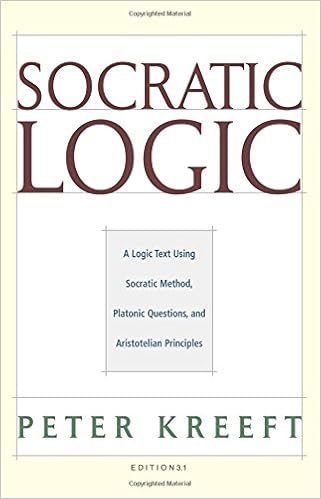
Socratic Logic: A Logic Text using Socratic Method, Platonic Questions, and Aristotelian Principles, Edition 3.1

Socratic Logic: A Logic Text using Socratic Method, Platonic Questions, and Aristotelian Principles, Edition 3.1


Socratic Logic: A Logic Text using Socratic Method, Platonic Questions, and Aristotelian Principles, Edition 3.1


Free Download Socratic Logic: A Logic Text using Socratic Method, Platonic Questions, and Aristotelian Principles, Edition 3.1

Exactly what's issue with you? Do you not mind to do anything in your downtime? Well, we assume that you need something new to acquire the present time now. It is not sort of you to do absolutely nothing in your spare time. Even you require some enjoyable relaxes; it doesn't imply that your time is for idleness. Were actually sure that you require added thing to accompany your downtime, don't you?

Why should be this publication Socratic Logic: A Logic Text Using Socratic Method, Platonic Questions, And Aristotelian Principles, Edition 3.1 to review? You will certainly never ever get the understanding and also experience without getting by yourself there or trying on your own to do it. For this reason, reading this publication Socratic Logic: A Logic Text Using Socratic Method, Platonic Questions, And Aristotelian Principles, Edition 3.1 is required. You could be great and also correct adequate to obtain how crucial is reading this Socratic Logic: A Logic Text Using Socratic Method, Platonic Questions, And Aristotelian Principles, Edition 3.1 Even you always review by obligation, you can support yourself to have reading e-book habit. It will certainly be so beneficial as well as fun after that.

Book includes the new details as well as lesson whenever you review it. By reviewing the material of this book, even couple of, you could get just what makes you really feel satisfied. Yeah, the discussion of the understanding by reviewing it might be so small, but the impact will certainly be so excellent. You could take it more times to recognize even more about this book. When you have completed material of Socratic Logic: A Logic Text Using Socratic Method, Platonic Questions, And Aristotelian Principles, Edition 3.1, you could truly recognize just how significance of a publication, whatever the book is

However, the existence of this book comes with the way how you truly need the far better choice of the new updates. This is just what to recommend for you in order to acquire the opportunities of making or developing new publication. When Socratic Logic: A Logic Text Using Socratic Method, Platonic Questions, And Aristotelian Principles, Edition 3.1 turns into one that is prominent this day, you need to be one part of such many people that always read this publication as well as get this as their buddy.

Socratic Logic: A Logic Text using Socratic Method, Platonic Questions, and Aristotelian Principles, Edition 3.1

Excerpt. © Reprinted by permission. All rights reserved.

An excerpt from chapter 1:Section 3. The two logics (P)(This section can be omitted without losing anything you will need later on in the book. It’s here both to satisfy the advanced student’s curiosity and to sell the approach of this book to prospective teachers who may question its emphasis on Aristotelian rather than symbolic logic, by justifying this choice philosophically.)     Almost four hundred years before Christ, Aristotle wrote the world’s first logic textbook. Actually it was six short books, which collectively came to be known as the Organon, or “instrument.” From then until 1913, when Bertrand Russell and Alfred North Whitehead published Principia Mathematica, the first classic of mathematical or symbolic logic, all students learned Aristotelian logic, the logic taught in this book.      The only other “new logic” for twenty-four centuries was an improvement on the principles of inductive logic by Francis Bacon’s Novum Organum (“New Or-ganon”), in the 17th century, and another by John Stuart Mill, in the 19th century.     (Inductive reasoning could be very roughly and inadequately defined as reasoning from concrete particular instances, known by experience, while deduction reasons from general principles. Induction yields only probability, while deduction yields certainty. “Socrates, Plato and Aristotle are mortal, therefore probably all men are mortal” is an example of inductive reasoning; “All men are mortal, and Socrates is a man, therefore Socrates is mortal” is an example of deductive reasoning.)      Today nearly all logic textbooks use the new mathematical, or symbolic, logic as a kind of new language system for deductive logic. (It is not a new logic; logical principles are unchangeable, like the principles of algebra. It is more like changing from Roman numerals to Arabic numerals.) There are at least three reasons for this change:     (1) The first and most important one is that the new logic really is superior to the old in efficiency for expressing many long and complex arguments, as Arabic numerals are to Roman numerals, or a digital computer to an analog computer, or writing in shorthand to writing in longhand.     However, longhand is superior to shorthand in other ways: e.g. it has more beauty and elegance, it is intelligible to more people, and it gives a more personal touch. That is why most people prefer longhand most of the time – as most beginners prefer simpler computers (or even pens). It is somewhat similar in logic: most people “argue in longhand,” i.e. ordinary language; and Aristotelian logic stays close to ordinary language. That is why Aristotelian logic is more practical for beginners.      Even though symbolic language is superior in sophistication, it depends on commonsense logic as its foundation and root. Thus you will have a firmer foundation for all advanced logics if you first master this most basic logic. Strong roots are the key to healthy branches and leaves for any tree. Any farmer knows that the way to get better fruit is to tend the roots, not the fruits. (This is only an analogy. Analogies do not prove anything – that is a common fallacy – they only illuminate and illustrate. But it is an illuminating analogy.)     Modern symbolic logic is mathematical logic. “Modern symbolic logic has been developed primarily by mathematicians with mathematical applications in mind.” This from one of its defenders, not one of its critics (Henry C. Bayerly, in A Primer of Logic. N.Y.: Harper & Row, 1973, p.4).     Mathematics is a wonderful invention for saving time and empowering science, but it is not very useful in most ordinary conversations, especially philosophical conversations. The more important the subject matter, the less relevant mathematics seems. Its forte is quantity, not quality. Mathematics is the only totally clear, utterly unambiguous language in the world; yet it cannot say anything very interesting about anything very important. Compare the exercises in a symbolic logic text with those in this text. How many are taken from the Great Books? How many are from conversations you could have had in real life?      (2) A second reason for the popularity of symbolic logic is probably its more scientific and exact form. The very artificiality of its language is a plus for its defenders. But it is a minus for ordinary people. In fact, Ludwig Wittgenstein, probably the most influential philosophical logician of the 20th century, admitted, in Philosophical Investigations, that “because of the basic differences between natural and artificial languages, often such translations [between natural-language sentences and artificial symbolic language] are not even possible in principle.” “Many logicians now agree that the methods of symbolic logic are of little practical usefulness in dealing with much reasoning encountered in real-life situations” (Stephen N. Thomas, Practical Reasoning in Natural Language, Prentice-Hall, 1973).      – And in philosophy! “However helpful symbolic logic may be as a tool of the . . . sciences, it is [relatively] useless as a tool of philosophy. Philosophy aims at insight into principles and into the relationship of conclusions to the principles from which they are derived. Symbolic logic, however, does not aim at giving such insight” (Andrew Bachhuber, Introduction to Logic (New York: Appleton-Century Crofts, 1957), p. 318).     (3) But there is a third reason for the popularity of symbolic logic among philosophers, which is more substantial, for it involves a very important difference in philosophical belief. The old, Aristotelian logic was often scorned by 20th century philosophers because it rests on two commonsensical but unfashionable philosophical presuppositions. The technical names for them are “epistemological realism” and “metaphysical realism.” These two positions were held by the vast majority of all philosophers for over 2000 years (roughly, from Socrates to the 18th century) and are still held by most ordinary people today, since they seem so commonsensical, but they were not held by many of the influential philosophers of the past three centuries.      (The following summary should not scare off beginners; it is much more abstract and theoretical than most of the rest of this book.)      The first of these two presuppositions, “epistemological realism,” is the belief that the object of human reason, when reason is working naturally and rightly, is objective reality as it really is; that human reason can know objective reality, and can sometimes know it with certainty; that when we say “two apples plus two apples must always be four apples,” or that “apples grow on trees,” we are saying something true about the universe, not just about how we think or about how we choose to use symbols and words. Today many philosophers are skeptical of this belief, and call it naïve, largely because of two 18th century “Enlightenment” philosophers, Hume and Kant.     Hume inherited from his predecessor Locke the fatal assumption that the immediate object of human knowledge is our own ideas rather than objective reality. Locke naïvely assumed that we could know that these ideas “corresponded” to objective reality, somewhat like photographs; but it is difficult to see how we can be sure any photograph accurately corresponds to the real object of which it is a photograph if the only things we can ever know directly are photographs and not real objects. Hume drew the logical conclusion of skepticism from Locke’s premise.      Once he limited the objects of knowledge to our own ideas, Hume then distinguished two kinds of propositions expressing these ideas: what he called “matters of fact” and “relations of ideas.”     What Hume called “relations of ideas” are essentially what Kant later called “analytic propositions” and what logicians now call “tautologies”: propositions that are true by definition, true only because their predicate merely repeats all or part of their subject (e.g. “Trees are trees” or “Unicorns are not non-unicorns” or “Unmarried men are men”).      What Hume called “matters of fact” are essentially what Kant called “synthetic propositions,” propositions whose predicate adds some new information to the subject (like “No Englishman is 25 feet tall” or “Some trees never shed their leaves”); and these “matters of fact,” according to Hume, could be known only by sense observation. Thus they were always particular (e.g. “These two men are bald”) rather than universal (e.g. “All men are mortal”), for we do not sense universals (like “all men”), only particulars (like “these two men”).      Common sense says that we can be certain of some universal truths, e.g., that all men are mortal, and therefore that Socrates is mortal because he is a man. But according to Hume we cannot be certain of universal truths like “all men are mortal” because the only way we can come to know them is by generalizing from particular sense experiences (this man is mortal, and that man is mortal, etc.); and we cannot sense all men, only some, so our generalization can only be probable. Hume argued that particular facts deduced from these only-probable general principles could never be known or predicted with certainty. If it is only probably true that all men are mortal, then it is only probably true that Socrates is mortal. The fact that we have seen the sun rise millions of times does not prove that it will necessarily rise tomorrow. Hume’s “bottom line” conclusion from this analysis is skepticism: there is no certain knowledge of objective reality (“matters of fact”), only of our own ideas (“relations of ideas”). We have only probable knowledge of objective reality. Even scientific knowledge, Hume thought, was only probable, not certain, because science assumes the principle of causality, and this principle, according to Hume, is only a subjective association of ideas in our minds. Because we have seen a “constant conjunction” of birds and eggs, because we have seen eggs follow birds so often, we naturally assume that the bird is the cause of the egg. But we do not see causality itself, the causal relation itself between the bird and the egg. And we certainly do not see (with our eyes) the universal “principle of causality.” So Hume concluded that we do not really have the knowledge of objective reality that we naturally think we have. We must be skeptics, if we are only Humean beings.     Kant accepted most of Hume’s analysis but said, in effect, “I Kant accept your skeptical conclusion.” He avoided this conclusion by claiming that human knowledge does not fail to do its job because its job is not to conform to objective reality (or “things-in-themselves,” as he called it), i.e. to correspond to it or copy it. Rather, knowledge constructs or forms reality as an artist constructs or forms a work of art. The knowing subject determines the known object rather than vice versa. Human knowledge does its job very well, but its job is not to learn what is, but to make what is, to form it and structure it and impose meanings on it. (Kant distinguished three such levels of imposed meanings: the two “forms of apperception”: time and space; twelve abstract logical “categories” such as causality, necessity, and relation; and the three “ideas of pure reason”: God, self, and world.) Thus the world of experience is formed by our knowing it rather than our knowledge being formed by the world. Kant called this idea his “Copernican Revolution in philosophy.” It is sometimes called “epistemological idealism” or “Kantian idealism,” to distinguish it from epistemological realism.     (“Epistemology” is that division of philosophy which studies human knowing. The term “epistemological idealism” is sometimes is used in a different way, to mean the belief that ideas rather than objective reality are the objects of our knowledge; in that sense, Locke and Hume are epistemological idealists too. But if we use “epistemological idealism” to mean the belief that the human idea (or knowing, or consciousness) determines its object rather than being determined by it, then Kant is the first epistemological idealist.)      The “bottom line” for logic is that if you agree with either Hume or Kant, logic becomes the mere manipulation of our symbols, not the principles for a true orderly knowledge of an ordered world. For instance, according to epistemological idealism, general “categories” like “relation” or “quality” or “cause” or “time” are only mental classifications we make, not real features of the world that we discover.      In such a logic, “genus” and “species” mean something very different than in Aristotelian logic: they mean only any larger class and smaller sub-class that we mentally construct. But for Aristotle a “genus” is the general or common part of a thing’s real essential nature (e.g. “animal” is man’s genus), and a “species” is the whole essence (e.g. “rational animal” is man’s species). (See Chapter III, Sections 2 and 3.)     Another place where modern symbolic logic merely manipulates mental symbols while traditional Aristotelian logic expresses insight into objective reality is the interpretation of a conditional (or “hypothetical”) proposition such as “If it rains, I will get wet.” Aristotelian logic, like common sense, interprets this proposition as an insight into real causality: the rain causes me to get wet. I am predicting the effect from the cause. But symbolic logic does not allow this commonsensical, realistic interpretation. It is skeptical of the “naïve” assumption of epistemological realism, that we can know real things like real causality; and this produces the radically anti-commonsensical (or, as they say so euphemistically, “counter-intuitive”) “problem of material implication” (see page 23).     Besides epistemological realism, Aristotelian logic also implicitly assumes metaphysical realism. (Metaphysics is that division of philosophy which investigates what reality is; epistemology is that division of philosophy which investigates what knowing is.) Epistemological realism contends that the object of intelligence is reality. Metaphysical realism contends that reality is intelligible; that it includes a real order; that when we say “man is a rational animal,” e.g., we are not imposing an order on a reality that is really random or chaotic or unknowable; that we are expressing our discovery of order, not our creation of order; that “categories” like “man” or “animal” or “thing” or “attribute” are taken from reality into our language and thought, not imposed on reality from our language and thought.      Metaphysical realism naturally goes with epistemological realism. Technically, metaphysical realism is the belief that universal concepts correspond to reality; that things really have common natures; that “universals” such as “human nature” are real and that we can know them.      There are two forms of metaphysical realism: Plato thought that these universals were real things in themselves, while Aristotle thought, more commonsensically, that they were real aspects of things which we mentally abstracted from things. (See Chapter II, Section 3, “The Problem of Universals.”)      The opposite of realism is “nominalism,” the belief that universals are only man-made nomini (names). William of Ockham (1285–1349) is the philosopher who is usually credited (or debited) with being the founder of nominalism. Aristotelian logic assumes both epistemological realism and metaphysical realism because it begins with the “first act of the mind,” the act of understanding a universal, or a nature, or an essence (such as the nature of “apple” or “man”). These universals, or essences, are known by concepts and expressed by what logic calls “terms.” Then two of these universal terms are related as subjects and predicates of propositions (e.g. “Apples are fruits,” or “Man is mortal”). “Aristotle never intended his logic to be a merely formal calculus [like mathematics]. He tied logic to his ontology [metaphysics]: thinking in concepts presupposes that the world is formed of stable species” (J. Lenoble, La notion de l’experience, Paris, 1930, p. 35).      Symbolic logic is a set of symbols and rules for manipulating them, without needing to know their meaning and content, or their relationship to the real world, their “truth” in the traditional, commonsensical sense of “truth.” A computer can do symbolic logic. It is quantitative (digital), not qualitative. It is reducible to mathematics.      The new logic is sometimes called “propositional logic” as well as “mathematical logic” or “symbolic logic” because it begins with propositions, not terms. For terms (like “man” or “apple”) express universals, or essences, or natures; and this implicitly assumes metaphysical realism (that universals are real) and epistemological realism (that we can know them as they really are).     Typically modern philosophers criticize this assumption as naïve, but it seems to me that this is a very reasonable assumption, and not naïve at all. Is it too naïve to assume that we know what an apple is? The new logic has no means of saying, and even prevents us from saying, what anything is!      And if we cease to say it, we will soon cease to think it, for there will be no holding-places in our language for the thought. Language is the house of thought, and homelessness is as life-threatening for thoughts as it is for people. If we should begin to speak and think only in nominalist terms, this would be a monumental historic change. It would reverse the evolutionary event by which man rose above the animal in gaining the ability to know abstract universals. It would be the mental equivalent of going naked on all fours, living in trees, and eating bugs and bananas. (Could monkeys have evolved by natural selection from nominalists?)      While it may be “extremist” to suggest it, such a mental “devolution” is not intrinsically impossible. And changes in logic are not wholly unrelated to it. Already, “internet logic,” or the logic of spontaneous association by “keywords,” is replacing “genus and species logic,” or the logic of an ordered hierarchy of objectively real categories. To most modern minds, those last seven words sound almost as archaic as alchemy or feudalism. Many criticize them as ideologically dangerous. These critics dislike categories because they “feel that” (that phrase is a category confusion, by the way) classifications, and universal statements about classes such as “Hittites could not read Hebrew,” constitute “prejudice,” “judgmentalism,” “oppression,” or even “hate speech.”      Logic and social change are not unrelated. Not only our logicians but also our society no longer thinks primarily about the fundamental metaphysical question, the question of what things are, the question of the nature of things. Instead, we think about how we feel about things, about how we can use them, how we see them behave, how they work, how we can change them, or how we can predict and control their behavior by technology. But all this does not raise us above the animal level in kind, only in degree. The higher animals too have feelings, and things to use, and sight, and action, and even a kind of technology of behavior prediction and control. For the art of hunting is an art of predicting and controlling the behavior of other animals. What do we have that no mere animal has? The thing that many modern philosophers vilify: abstraction. We have the power to abstract and understand universals. This is the thing traditional logic is founded on, and this is the thing symbolic logic ignores or denies.      Logic is deeply related to moral and ethical changes in both thought and practice. All previous societies had a strong, nearly universal, and rarely questioned consensus about at least some basic aspects of a “natural moral law,” about what was “natural” and what was “unnatural.” There may not have been a greater obedience to this law, but there was a much greater knowledge of it, or agreement about it. Today, especially in the realm of sex (by far the most radically changed area of human life in both belief and practice), our more “advanced” minds find the old language about “unnatural acts” not only “politically incorrect” but literally incomprehensible, because they no longer accept the legitimacy of the very question of the “nature” of a thing. Issues like homosexuality, contraception, masturbation, pedophilia, incest, divorce, adultery, abortion, and even bestiality are increasingly debated in other terms than the “nature” of sexuality, or the “nature” of femininity and masculinity. It is not an unthinkable suspicion that one of the most powerful forces driving the new logic is more social than philosophical, and more sexual than logical.     Symbolic logic naturally fosters utilitarian ethics, which is essentially an ethic of consequences. The fundamental principle of utilitarianism is that an act is good if its probable consequences result in “the greatest happiness for the greatest number” of people. It is an “if . . . then . . .” ethics of calculating consequences – essentially, “the end justifies the means” (though that formula is somewhat ambiguous). Symbolic logic fits this perfectly because it is essentially an “if . . . then . . .” logic, a calculation of logical consequences. Its basic unit is the proposition (p or q) and its basic judgment is “if p then q.” In contrast, Aristotelian logic naturally fosters a “natural law ethic,” an ethic of universal principles, based on the nature of things, especially the nature of man. For its basic unit is the term, a subject (S) or a predicate (P) within a proposition (p); and its basic judgment is “all S is P” – a statement of universal truth about the nature of S and P.      The very nature of reason itself is understood differently by the new symbolic logic than it was by the traditional Aristotelian logic. “Reason” used to mean essentially “all that distinguishes man from the beasts,” including intuition, understanding, wisdom, moral conscience, and aesthetic appreciation, as well as calculation. “Reason” now usually means only the last of those powers. That is why many thinkers today who seem at first quite sane in other ways actually believe that there is no fundamental difference between “natural intelligence” and “artificial intelligence” – in other words, you are nothing but a computer plus an ape. (Having met some of these people at MIT, I must admit that their self-description sometimes seems quite accurate.)     Aristotelian logic is not exact enough for the nominalistic mathematical logician, and it is too exact for the pop psychology subjectivist or New Age mystic. Out at sea there between Scylla and Charybdis, it reveals by contrast the double tragedy of modern thought in its alienation between form and matter, structure and content, validity and meaning. This alienated mind was described memorably by C.S. Lewis: “the two hemispheres of my brain stood in sharpest contrast. On the one hand, a glib and shallow rationalism. On the other, a many-islanded sea of myth and poetry. Nearly all that I loved, I believed subjective. Nearly all that was real, I thought grim and meaningless” (Surprised by Joy). Neither mathematical logic nor “experience” can heal this gap; but Aristotelian logic can. It is thought’s soul and body together, yet not confused. Mathematical logic alone is abstract and “angelistic,” and sense experience and feeling alone is concrete and “animalistic,” but Aristotelian logic is a human instrument for human beings.      Aristotelian logic is also easier, simpler, and therefore time-saving. For example, in a logic text book misleadingly entitled Practical Reasoning in Natural Language, the author takes six full pages of symbolic logic to analyze a simple syllogism from Plato’s Republic that proves that justice is not rightly defined as “telling the truth and paying back what is owed” because returning a weapon to a madman is not justice but it is telling the truth and paying back what is owed. (pp. 224–30). Another single syllogism of Hume’s takes eight pages to analyze (pp. 278–86).     I have found that students who are well trained in Aristotelian logic are much better at arguing, and at understanding arguments, than students who are trained only in symbolic logic. For Aristotelian logic is the logic of the four most basic verbal communication arts: reading, writing, listening, and speaking. It is the logic of Socrates. If you want to be a Socrates, this is the logic you should begin with.      The old logic is like the old classic movies: strong on substance rather than sophistication. The new logic is like typically modern movies: strong on “special effects” but weak on substance (theme, character, plot); strong on the technological “bells and whistles” but weak on the human side. But logic should be a human instrument; logic was made for man, not man for logic.The Problem of “Material Implication”     The following issue is quite abstract and difficult, though I shall try to make it as simple as possible. It is included because I believe it shows that “something is rotten in the state of Denmark” at the very heart of the new logic. (For a fuller treatment of the new logic see the Appendix, p. 364.)     Logic is most especially about reasoning, or inference: the process of thinking by which we draw conclusions from evidence, moving from one proposition to another. The proposition we begin with is called a “premise” and the proposition we move to, or infer, or reason to, is called a “conclusion.”      The simplest and most straightforward kind of reasoning is to move from a true premise (or, more usually, from a number of true premises together) to a true conclusion. But we can also use false propositions in good reasoning. Since a false conclusion cannot be logically proved from true premises, we can know that if the conclusion is false then one of the premises must also be false, in a logically valid argument.     A logically valid argument is one in which the conclusion necessarily follows from its premises. In a logically valid argument, if the premises are true, then the conclusion must be true. In an invalid argument this is not so. “All men are mortal, and Socrates is a man, therefore Socrates is mortal” is a valid argument. “Dogs have four legs, and Lassie has four legs, therefore Lassie is a dog” is not a valid argument. The conclusion (“Lassie is a dog”) may be true, but it has not been proved by this argument. It does not “follow” from the premises.     Now in Aristotelian logic, a true conclusion logically follows from, or is proved by, or is “implied” by, or is validly inferred from, only some premises and not others. The above argument about Lassie is not a valid argument according to Aristotelian logic. Its premises do not prove its conclusion. And common sense, or our innate logical sense, agrees. However, modern symbolic logic disagrees. One of its principles is that “if a statement is true, then that statement is implied by any statement whatever.” Since it is true that Lassie is a dog, “dogs have four legs” implies that Lassie is a dog. In fact, “dogs do not have four legs” also implies that Lassie is a dog! Even false statements, even statements that are self-contradictory, like “Grass is not grass,” validly imply any true conclusion in symbolic logic. And a second strange principle is that “if a statement is false, then it implies any statement whatever.” “Dogs do not have four legs” implies that Lassie is a dog, and also that Lassie is not a dog, and that 2 plus 2 are 4, and that 2 plus 2 are not 4.       This principle is often called “the paradox of material implication.” Ironically, “material implication” means exactly the opposite of what it seems to mean. It means that the matter, or content, of a statement is totally irrelevant to its logically implying or being implied by other statements. Common sense says that Lassie being a dog or not being a dog has nothing to do with 2+2 being 4 or not being 4, but that Lassie being a collie and collies being dogs does have something to do with Lassie being a dog. But not in the new logic, which departs from common sense here by totally sundering the rules for logical implication from the matter, or content, of the propositions involved. Thus, the paradox ought to be called “the paradox of non-material implication.”     The paradox can be seen in the following imaginary conversation:Logician: So, class, you see, if you begin with a false premise, anything follows.Student: I just can’t understand that.Logician: Are you sure you don’t understand that?Student: If I understand that, I’m a monkey’s uncle.Logician: My point exactly. (Snickers.)Student: What’s so funny?Logician: You just can’t understand that.     The relationship between a premise and a conclusion is called “implication,” and the process of reasoning from the premise to the conclusion is called “inference.” In symbolic logic, the relation of implication is called “a truth-functional connective,” which means that the only factor that makes the inference valid or invalid, the only thing that makes it true or false to say that the premise or premises validly imply the conclusion, is not at all dependent on the content or matter of any of those propositions, but only whether the premise or premises are true or false and whether the conclusion is true or false.      That last paragraph was cruelly abstract. Let’s try to be a little more specific. In symbolic logic,(1) If the premise or premises (let’s just say “the premise” for short) are true and the conclusion is true, then the “if . . . then” proposition summarizing the implication is true. If p is true and q is true, then “if p then q” is true. So “if grass is green, then Mars is red” is true.(2) If the premise is true and the conclusion is false, then the “if . . . then” proposition summarizing the implication is false. If p is true and q is false, then “if p then q” is false. So “if grass is green, then Mars is not red” is false.(3) If the premise is false and the conclusion is true, then the “if . . . then” proposition summarizing the implication is true. If p is false and q is true, then “if p then q” is true. So “if grass is purple, then Mars is red” is true.(4) If the premise is false and the conclusion is false, then the “if . . . then” proposition summarizing the implication is true. If p is false and q is false, then “if p then q” is true. So “if grass is purple, then Mars is purple” is also true!     In this logic, if the premise and the conclusion are both false, the premise implies the conclusion (this is #4), and if the premise is false and the conclusion is true, the premise also implies the conclusion (this is #3). So if the moon is blue, then the moon is red (#4); and if the moon is blue, then the moon is not blue (#3)! This may make some defensible sense mathematically, but it certainly does not make sense commonsensically, for it does not seem to make sense in the real world.      Logicians have an answer to the above charge, and the answer is perfectly tight and logically consistent. That is part of the problem! Consistency is not enough. Logic should be not just a mathematically consistent system but a human instrument for understanding reality, for dealing with real people and things and real arguments about the real world. That is the basic assumption of the old logic. If that assumption is naïve and uncritical, unfashionable and unintelligent – well, welcome to Logic for Dummies.

Read more

Product details

Hardcover: 410 pages

Publisher: St. Augustines Press; 3rd edition (September 15, 2010)

Language: English

ISBN-10: 9781587318085

ISBN-13: 978-1587318085

ASIN: 1587318083

Product Dimensions:

6 x 1.1 x 9 inches

Shipping Weight: 1.5 pounds (View shipping rates and policies)

Average Customer Review:

4.5 out of 5 stars

57 customer reviews

Amazon Best Sellers Rank:

#49,748 in Books (See Top 100 in Books)

This was purchased as a gift for a man who is in Priestly (Roman Catholic) formation. He recently sent me a post card telling me how much he is enjoying this book. In his seminary class they had run out of time to study this as a class, but he is finding Prof Peter Kreeft a good hands-on instructor. (I have also found this to be the case. Prof Kreeft is very easy to read and understand. I would say high school level for those students interested in the subject matter.)

BEST LOGIC BOOK OUT THERE. Period. I have read logic books from catholic authors: Joyce (Principles of Logic), Clarke (Logic), Glenn (Dialectics), Sr. Miriam Joseph (Trivium). The first two are attainable online for free. The last two are not. All these are good books, but Socratic Logic is in a league of its own. The book has tons of practice exercises, and often sprinkles in some GKChesterton-style humor to make the reader actually enjoy learning this often dry subject. Don't waste your time with any other logic book.

I picked this up because I am a Peter Kreeft fan. I have read a dozen or so of his books and this looked to be yet another interesting title. Well, it has been a great investment of my time, money and energy. The other 20+ reviews to into great detail on the content, so I will not not repeat it. If you are interested in traditional logic of Aristotle, Socrates and Plato then this book is for you. The style is easy to read but deep in content and thought. You will not find another book on traditional deductive logic that is as complete and easy to read as this.

If you want to learn how to think clearly, to understand why and how arguments work or fail this book is for you. This isn't a primer on symbolic logic, logic as math, that is useful only for the specialist. Kreeft has instead explained, in layman's terms, common sense logic. If you want to think clearly, stop what you are doing and buy this book.

This extraordinary book is both humbling and enlightening. Should you think you are a capable, and perhaps even above average, reasoner, you may, as I have, discover you have a lot to learn. As you make this discovery, you will find that you are in good company. As an example, Dr. Kreeft explains that Rene Descartes' famous dictum, "I think, therefore I am," is a logical fallacy called "begging the question" as it incorporates the conclusion as a hypothesis. This is, of course, only a small sample of the wisdom contained in Dr. Kreeft's fine book. Should you wish to be able to separate the intellectual wheat from the chaff, this is an excellent place to start.

A good text on classical logic for those of us who view Russell and Whithead's attempt at convereting Boolean Algebra into linguistic analysis as catastophic.

If you are looking for an introductory text which is at the same time in-depth, and gives you a good grounding in classical logic as well as enables you to spread your wings a little and have fun with the content, this is the book for you. I am a high school teacher at a school founded on a Classical model, and I use some of the material in this book to inform and enrich my curriculum.

Simply brilliant exposition of and instruction in, the logic of everyday speech and writing. It will help to bulletproof your mind from the constant illogic that comes at all of us every day. Especially good for that bright high schooler or college freshman.

Socratic Logic: A Logic Text using Socratic Method, Platonic Questions, and Aristotelian Principles, Edition 3.1 PDF
Socratic Logic: A Logic Text using Socratic Method, Platonic Questions, and Aristotelian Principles, Edition 3.1 EPub
Socratic Logic: A Logic Text using Socratic Method, Platonic Questions, and Aristotelian Principles, Edition 3.1 Doc
Socratic Logic: A Logic Text using Socratic Method, Platonic Questions, and Aristotelian Principles, Edition 3.1 iBooks
Socratic Logic: A Logic Text using Socratic Method, Platonic Questions, and Aristotelian Principles, Edition 3.1 rtf
Socratic Logic: A Logic Text using Socratic Method, Platonic Questions, and Aristotelian Principles, Edition 3.1 Mobipocket
Socratic Logic: A Logic Text using Socratic Method, Platonic Questions, and Aristotelian Principles, Edition 3.1 Kindle

Socratic Logic: A Logic Text using Socratic Method, Platonic Questions, and Aristotelian Principles, Edition 3.1 PDF

Socratic Logic: A Logic Text using Socratic Method, Platonic Questions, and Aristotelian Principles, Edition 3.1 PDF

Socratic Logic: A Logic Text using Socratic Method, Platonic Questions, and Aristotelian Principles, Edition 3.1 PDF